Insights on Research Creation Processes
Moving into research creation calls for relational ethics rooted in conditions and trajectories of collective care.

Re/Search Ethics
As a pivotal project cornerstone, we engaged in a community-centred research ethics process that involved intentional disruption to traditional academic processes of research power and gatekeeping. As opposed to outlining an academic-driven research ethics protocol at the outset of our work, we sought and received approval from OCAD University to engage in collaborative research design with the recruited emerging artists co-researchers.
This was a purposeful act to revert the subjectification that younger and gender and racially diverse folks often experience in research. Engaging collectively as co-researchers meant we could define ethics paradigms together, and allowed us to explore new processes for honouring power sharing principles.
We were challenged by several core aspects of university research ethics processes. In particular, by the predominant focus of institutionalized ethics on risk and harm, often at the expense of empowerment and innovation. As we deepened our research creation explorations, the artists began to explore more and more socially-engaged ideas. We needed time and space to work out ethical community collaboration and consent procedures that appropriately balanced risk and creativity.
A key area of tension involved challenges related to balancing concerns around risk with our focus and values of centring agency and empowerment. Research ethics boards and processes involve significant attention to concerns of risk and vulnerability. This is very important and necessary to ensure that research is not misleading, exploitative or damaging. This focus can however lead to situations that involve boundary setting and feelings of control or paternalism placed on research participants as “research subjects”. Such tensions can pose particular challenges for arts-based and research creation projects that are rooted in exploration, ideation and community engagement.
Partnering with the emerging artists as co-researchers allowed for shared defining of ethics processes, centred in honouring their agency as researchers, as opposed to “subjects”. However, balancing this focus while attending to requirements of university ethics boards was not without frustration and hierarchical disruption. Lots of uncertainties of direction were experienced while we explored how best to navigate collaborative intentions and institutional consent procedures. This meant in particular that we had to ask the artists to hold on or adapt their community-engaged ideas.
Ultimately however we found overall that this co-researcher model allowed us to design a flexible ethics consent process that allowed for emergence and creative autonomy as artist-researchers, while ensuring protective informed consent of research participants.
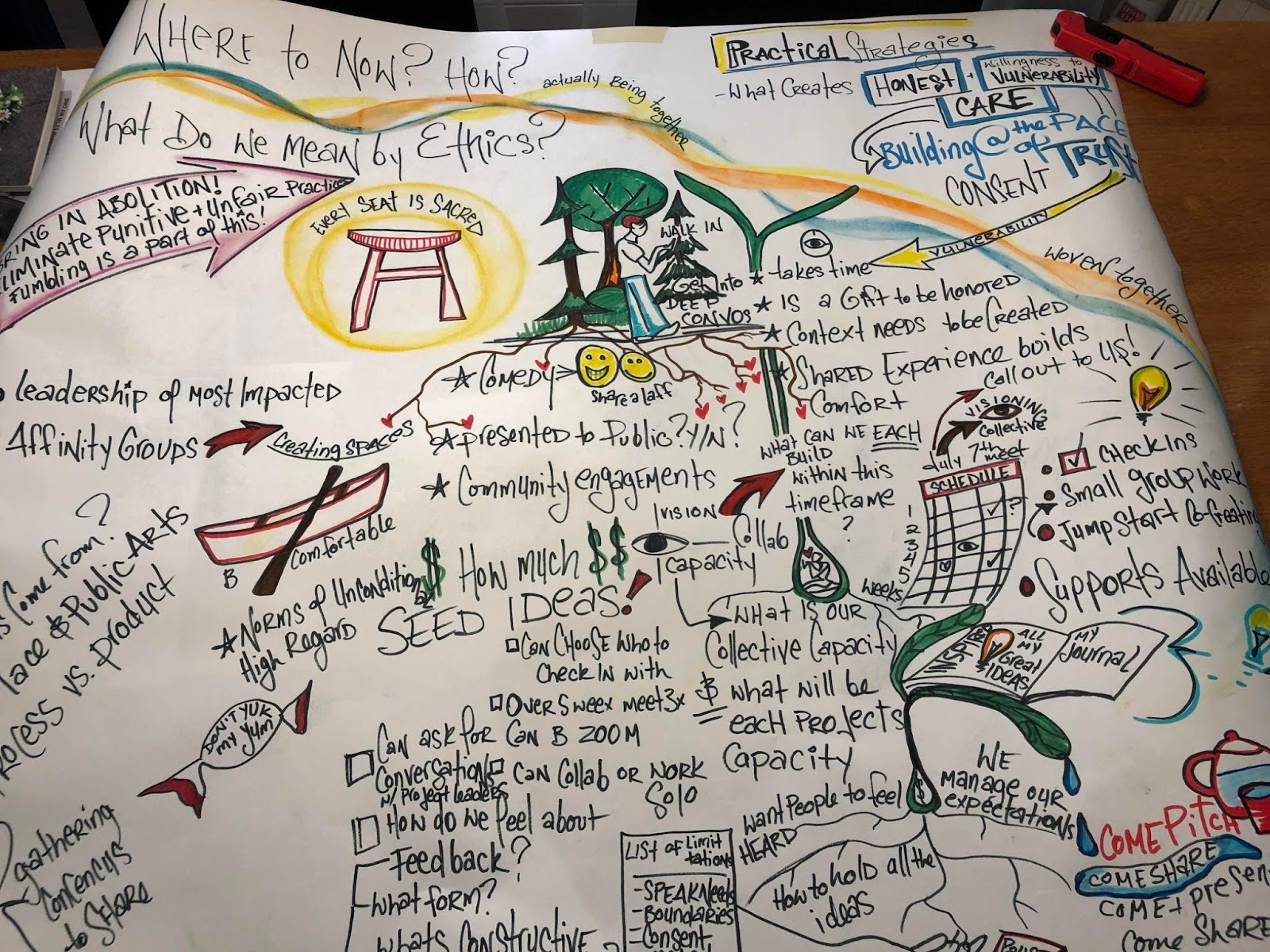
While addressing academic research ethics challenges, we also engaged in a community agreements ethics process centered around promoting conditions for care, honesty, vulnerability, nuance and complexity.
What would create the conditions for folks to ask for and trust that they will get what they need, as an active and visible part of mobilizing?
What happens when things fall apart?
Key Principles of our RRR Community Agreements

Meaning Making
Through research creation “pitch” sessions artists shared ideas for socially-engaged artworks and creative research they were dreaming up and/or currently working on. From these pitches, three key areas/themes of interest were identified, representing a fresh and coherent take on socially-engaged arts practice and learning.
Identities & Solidarities

Land & Nature Relationships
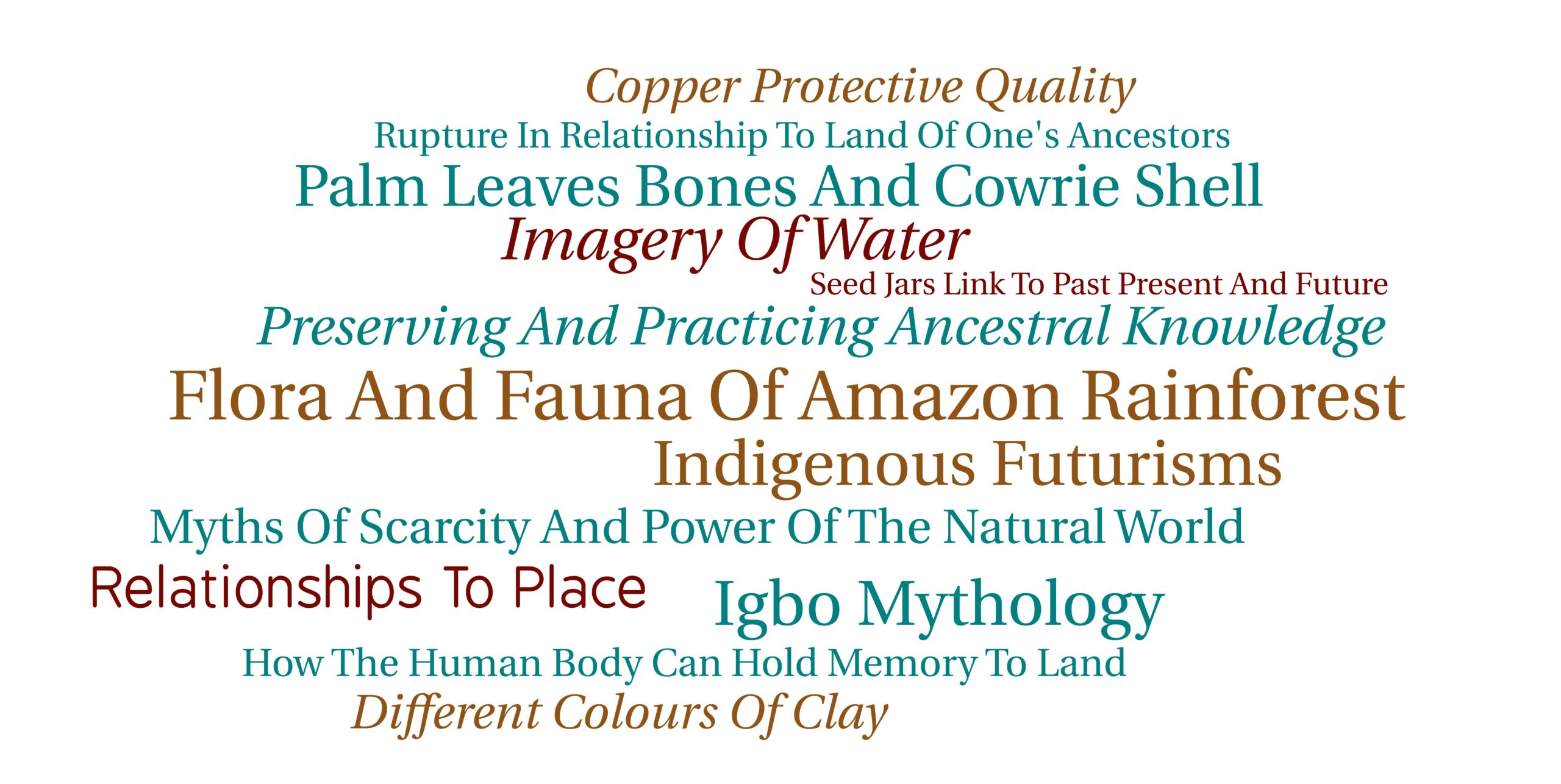
Healing, Care, Spirit

Sometimes research can lead to art, and art can lead to research. I wouldn't have found my way to this research without this art project, and I wouldn't have created this art without my research.
RRR Artist Researcher Maggie Chang
Conditions for Creation
While delving further into socially-engaged practice, our project began in and remained driven by the personal practices of the participating artists.
Within much desire to collaborate and make art together, we were challenged by time and space constraints.
We began to recognize that the strongest role this process could play was in working flexibly and reflexively to support each artist’s personal goals and practice, based in collective processes of care and belonging. By continually honoring complexities of personal practice and place, in particular seeing artists personal journeys and even creative blocks as treasured spaces for creating and insight.
Within these experiences of personal trajectories and collective constraints a pressing question continued to resonate.
How do we create the conditions for creation?
One way we sought to answer was in the resourcing of the emerging artists. We iterated on a project and stipend structure that sought to prioritize relationship building, exploration and a fulsome research and production timeline, as opposed to narrowly focusing on work plans, products or deliverables.
Though imperfect, the artists identified this opportunity as a more open and holding space for their practice.
This was juxtaposed against broader and infrastructural challenges of time, money and space.
The artists expressed appreciation for being resourced to come together in ways that helped to motivate, incubate and expand their creative ideas and bring them to life.