In Dialogue with Bert Whitecrow & Kaya Joan
synthesis by Charlotte Lombardo
Bert Whitecrow and Kaya Joan are Indigenous artists and placemakers, and founding members of the Weave & Mend collective. The following is an excerpt from their talk at the Together Apart festival and symposium on DIY arts culture. Bert & Kaya speak to their personal and collective approaches to place, and introduce their new partnership Milkweed.
Kaya Joan
My sense of self and my sense of place have been increasingly woven together, which has been a beautiful process.

I was born in Toronto. This city has influenced who I am as a person, how I orient myself, how I move through the world. I’ve grown up near ravines my whole life. That’s really impacted how I learn, how I relate to place, how I see land in the city.
I like to use the metaphor of the rivers that are buried underneath this city as a way that I relate to myself. Although so much has been buried within myself, from my own history, family, diasporic feelings, disconnections from land. Yet this history still runs through me, and I still have access to that knowledge, that magic. My work is oriented around this, around how to place it all.
It’s easy to separate ourselves from land here in the city, because it’s all buried under concrete. But there are very rich histories here. There are still many medicines that grow here. And there’s still a future that I like to imagine for the city, where we all share the resources that were here before colonization, through examining our collective responsibilities and honouring treaty relationships.
Bert Whitecrow
My art practice centers around the idea of place, the meaning of places to me.
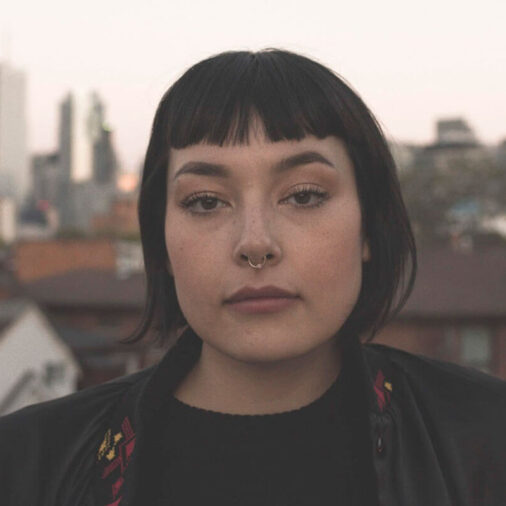
I moved to Toronto about seven years ago. Coming here was destabilizing, a complete culture shock. By situating myself in community arts and Indigenous collectives, I see the city in a different light now. I feel more grounded to the histories and land here.
Place is the theme of my video piece, Acknowledge Place Honour Spirit, which is being exhibited here at Together Apart. The footage was filmed at my cabin on Calm Lake, which was a second home to me. The images and personal narrative explore the teaching mino bimaadiziwin, an Anishnaabe mindset of life, where everything is interconnected. Honouring spirit in water, trees, rocks, stories. Breaking down boundaries that I feel Western culture puts on place. Situating myself in the land.
Acknowledge Place, Honour Spirit
Founding the Weave and Mend Collective
Weave and Mend came together as a collective in 2017, answering a call from SKETCH Working Arts to develop and animate a community garden space.
The initial ask from SKETCH was to design a bench. We ended up designing a whole Indigenous medicine garden, on sidewalk space outside of Artscape Youngplace.

We built a pathway, with archways to represent the four directions.
We designed a circle of tree stumps transformed into benches.
We grew strawberries, sweet grass, cedar, and tobacco.
And we’ve hosted cultural workshops, drum circles and curated art shows there.

Everyone involved has had a very open, yes type attitude. Openness to just let us dream. It was so beautiful to be encouraged like that, especially as a youth, very nourishing. To have space provides a sort of power and autonomy. When people listen to and respect you in that way.
The most interesting thing about the evolution of the garden is what it has brought to the neighborhood and the community. People have expressed that the space is healing for them. People host conversations there. It has really created this place of dialogue, for different people to come together to converse with each other, and maybe break down barriers with one another.
It is a fresh outlook on art making, on community and what that means, and what that can look like.

Making Place in the City
It’s a way of making place in the city, of claiming space. Decolonial work. Transforming concrete into a garden space for people to gather. For children to play and tell stories. A place for being, for noticing, in an emotional, relational way.
These spaces are so important, especially in regards to giving Indigenous people space and autonomy over the land. Because there’s been so much trauma, such huge disconnect between culture and place and land and people.
It’s really healing to work with the earth, especially in urban environments. These spaces are important. We were able to reconnect with and transform the land itself. And it wasn’t rushed, regardless of the grant, it had its own timeline. It was an emotional, beautiful process. I think the space is a testament to what is possible when Indigenous youth are given autonomy over place.
Place to connect with culture, to share and learn in community, with and through our traditions.
Introducing Milkweed
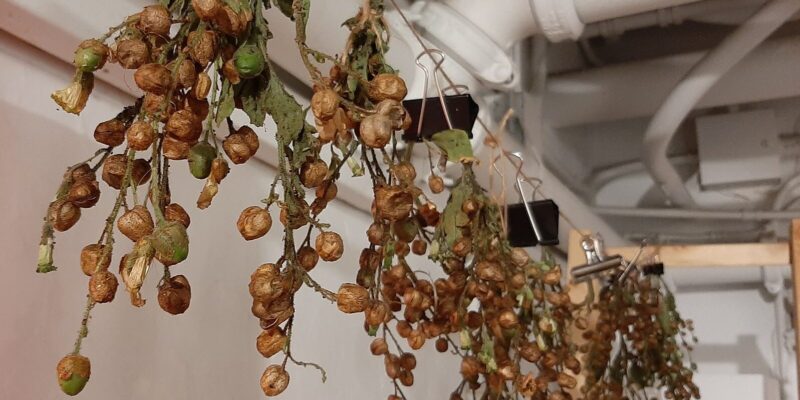
Now we, Bert and Kaya, are taking these experiences, these histories, to create a new partnership called Milkweed. We have similar ideas, similar goals, we are kindred spirits. We want to build on these together.
We are planning an online podcast series, building on our network and reaching out to other collectives within the city. To amplify their voices. To be in conversation with them.
Especially emerging from the pandemic, a lot of important issues have surfaced. The pandemic really pushed us towards thinking about ways to uplift the incredible work that people are doing in the community. Capacity building, Indigenous harm reduction, Black farming. A lot of really awesome people, doing amazing work.